Listening Tips
Stopped Hearing the Audio? How to Break CELPIP Listening Brain Fog and Reclaim Your Score
You zone out mid-test. The audio keeps playing. Learn the recovery protocol, strategic note-taking, and 7-day prep drills that turn brain fog into a manageable moment—not a meltdown.
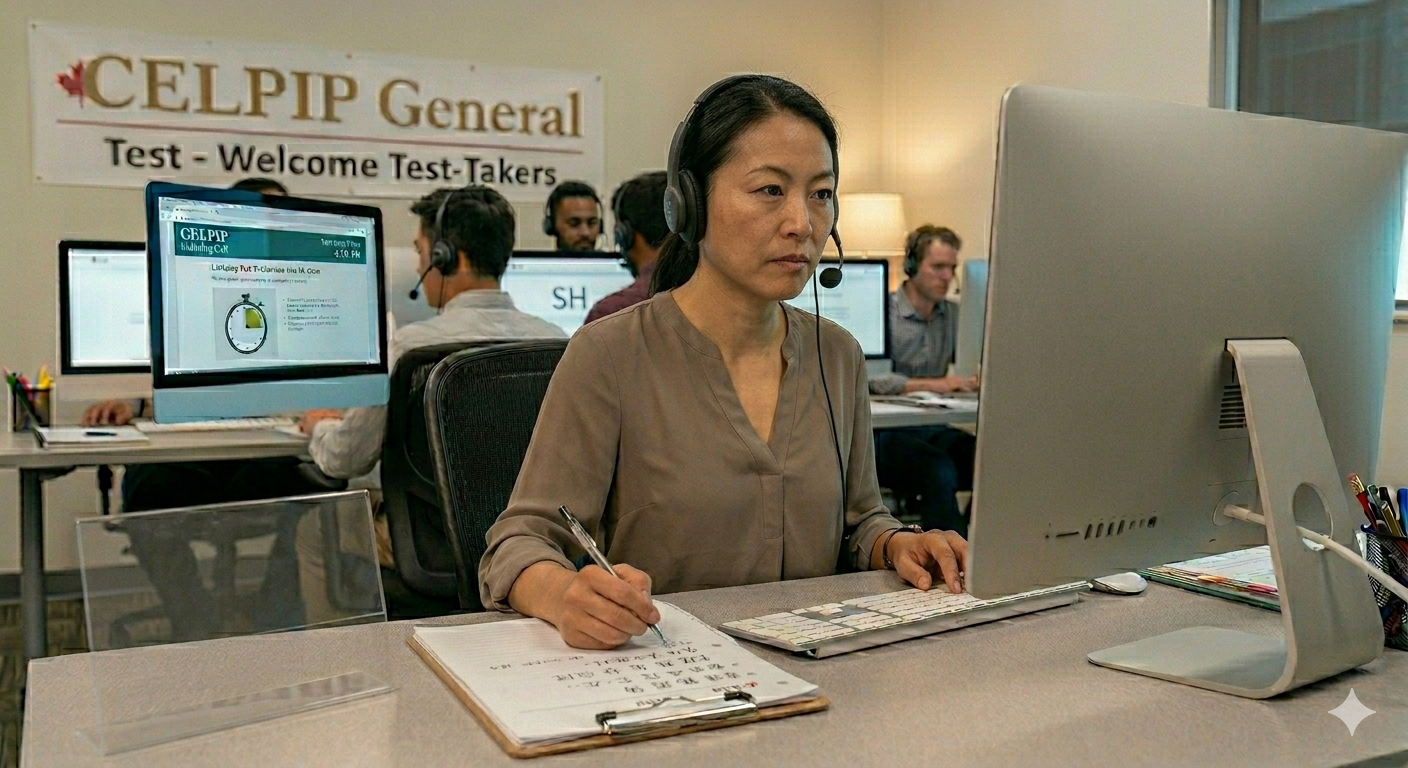
You're in the Test Center. The Headphones Are On.
You've just finished Listening Part 3. Suddenly, your attention drops. The speaker is talking about a municipal infrastructure project, but it feels like static. You're still listening, but nothing is sticking.
Then panic kicks in: Am I failing? Is my English bad?
By Part 5, you're spiraling, missing easy details because your brain is overwhelmed.
Mentor note: This isn't a language problem. It's a load problem. Listening here demands three things at once: processing in real time, filtering signal from noise, and sometimes taking notes—all with audio you only hear once.
The good news: brain fog is preventable and recoverable with the right system. Most learners who master the three-step protocol (prime, anchor, reset) see a 0.5–1 CLB-style jump in preparation because they stop losing points to panic and start using what they actually understand.
Why Brain Fog Happens (And Why It's Normal)
Working memory is limited. When it fills up—processing a new word, noting a detail, tracking a speaker switch—new information drops. That's what feels like "brain fog."
The key insight: Strong listening isn't about perfect recall. It's about staying oriented and recovering fast. Miss one word? Mark it and move. The next item matters more than replaying the last one in your head.
Your goal is building resilience, not photographic memory.
Let's build a system that prevents fog from derailing you in the first place.
The Three-Step Protocol (Prime, Anchor, Reset)
Step 1: Prime (Before Audio)
- Take 5 seconds to picture the setting
- Answer: Who is speaking? Where? What's the task?
- This activates your background knowledge so new vocabulary lands on a frame you already have
Step 2: Anchor (During Audio)
- Don't try to write transcripts—mark signposts instead
- Circle contrasts: "but," "however," "actually," "in fact"
- Write 3–4 anchors per minute (not full sentences)
- Use your symbols:
→(leads to),↑(increase),✓(agree),?(unclear)
Step 3: Reset (When You Miss Something)
- If you lose a detail, mark it with
?and move immediately - Do NOT rewind mentally or dwell
- Stay with the current speaker; next clause matters more than last word
Now let's look at what changes by CELPIP part—because each one tests a different skill.
What Each Part Tests (And What Fog Looks Like)
| Part | Type | What's Being Tested | Common Fog | Your Focus |
|---|---|---|---|---|
| 1-3 | Daily life & problems | Who? What? Where? | Over-writing simple turns | Keywords + arrows (Sarah → clinic → referral) |
| 4 | News-style item | Main angle + Why it matters | Chasing tiny dates first | One headline + 2–3 facts |
| 5 | Video discussion | Tone + Who said what | Losing speaker tracking | T-chart (Speaker A vs. Speaker B) |
| 6 | Viewpoints | Stance + Reasons | Tracking facts only (missing opinion) | Signpost words (however, argue, skeptical) |
Pattern: Parts ramp up in complexity, but the habit stays the same: prime the scene, listen for shifts, answer on meaning.
Part-by-Part Note Strategy
Parts 1–3: Who / What / Where
- Write: keywords and arrows linking them
- Example: "Sarah → clinic → referred to specialist"
- Aim: 3–4 anchors per turn
Part 4: Main Idea + One Key Fact
- Write: one headline (one line), then one supporting fact
- Example: "Infrastructure report | Budget 50M over 5 years"
- Aim: Know why it matters, not every detail
Parts 5–6: Speaker Positions + Reasons
- Use a T-chart (two columns, one speaker each)
- Example: Left: "Speaker A supports park project | Wants green space for families | Worried about upkeep"
- Right: "Speaker B opposes | Budget-focused | Prefers different spending"
- Aim: Track who said what and why
The rule: Pen down most of the time—ears lead, hand supports.
You now have the protocol and part-by-part strategy. Let's practice it with a 7-day drill that builds automaticity.
7-Day Brain Fog Recovery Workout
Day 1: News summary baseline
Listen to a 3–5 minute CBC-style clip. After each story, write three bullets: who, change, why it matters.
Day 2: Signpost marking
Repeat with a new clip. Star every contrast marker you hear (but, however, actually, in fact).
Day 3: Echo + transcript once
Use a short clip: read the transcript once, then listen without it and note where your memory drifts.
Day 4: Harder topic
Same pattern, unfamiliar topic—stretch vocabulary and density, not speed tricks.
Day 5: Full listening set (notes focus)
Complete a timed listening practice set. Score later—first pass is about note quality and recovery.
Day 6: Error pattern review
Tag misses as language (word/knowledge) vs execution (missed signpost, wrote too much, spiraled after one gap).
Day 7: Light input or rest
Easy English only (podcast walk, movie trailer). Consolidation matters; skip heavy drills one day a week.
You've learned the system. Before your next practice test, lock in these habits.
Pre-Test Brain Fog Checklist
- T-chart or two-column space ready for multi-speaker parts — Especially when viewpoints split clearly
- Pen down most of the time—ears lead, hand supports — Aim for a few anchors per minute, not transcripts
- 2-second reset rule internalized — Missed word → mark and move, no rewind in your head
- Listening for signposts, not only content words — Contrasts often carry the answer
- Answer on paraphrase, not surface wording — 'Infrastructure' matches 'public works'—same meaning, different words
- Recovery mindset: fog is normal under load — Your protocol is the skill; one rough passage doesn't erase preparation
Advanced: The Mindset Shift
Brain fog often flips a switch in your head: I'm failing. But test anxiety under real-time load is normal. The difference between high and low scorers isn't that one never feels fog—it's that they have a recovery protocol.
Under stress, your brain defaults to these habits:
- Try to capture every word ❌ → Capture a few anchors per turn ✅
- Panic on unknown vocabulary ❌ → Stay with tone and known content ✅
- Dwell on a miss ❌ → Reset and track the next clause ✅
- Re-read messy notes during audio ❌ → Use notes mainly when answering ✅
The shift: Accept limits. You're building prioritization and resilience, not photographic memory. One rough Part 4 doesn't erase the rest of your test.
Myth: "If I miss one word, my score is ruined."
Reality: Examiners understand listening isn't perfect. They're testing comprehension under pressure. One gap doesn't cascade unless you spiral. Reset and move.
Myth: "Good listeners don't experience brain fog."
Reality: Even native speakers zone out in complex audio. The difference is that trained listeners reset faster and capture meaning, not perfection. Brain fog is a load signal, not a failure signal.
Myth: "I should read the questions before listening to prepare myself."
Reality: You often don't get full questions up front on CELPIP. Use the on-screen intro to picture the setting (who, where, task) instead. That's your frame.
Key Takeaway
Brain fog isn't a verdict on your English—it's a sign that you need a better system. Prime before audio. Anchor signposts, not transcripts. Reset when you miss. By test day, this protocol becomes automatic, and fog stops feeling like a meltdown. Instead, it's just a moment where you mark, move, and continue.
Next steps:
- Run the 7-day brain fog workout above (start today)
- Apply the three-step protocol (prime, anchor, reset) on your next listening practice
- Review Part 5–6 using the T-chart strategy
- After a week, compare your errors: are they knowledge gaps or execution gaps? Adjust your focus.
Pair with these resources:
- Listening Note-Taking Framework — The three-column system for capturing meaning
- CELPIP Listening Practice Tests — Real exams to apply this protocol
- Test Anxiety Recovery Guide — Broader mindset work if fog triggers panic
Glossary
Signpost / Shift Words: Markers that signal contrast or correction—"but," "however," "actually," "in fact." High value in opinion-heavy listening.
Echoic Memory: Very short retention of what you just heard—useful when paraphrase items follow immediately.
CLB: Canadian Language Benchmarks; immigration programs set their own required levels.
Recovery Protocol: The three-step system (prime, anchor, reset) that prevents brain fog from derailing you.