Speaking Tips
CELPIP Speaking Awkwardness: How to Feel Natural When You Talk to the Screen
The CELPIP Speaking room feels weird—noise, headsets, and a timer. Here is how to get past awkwardness so listenability stays high when you chase CLB 9-style fluency.
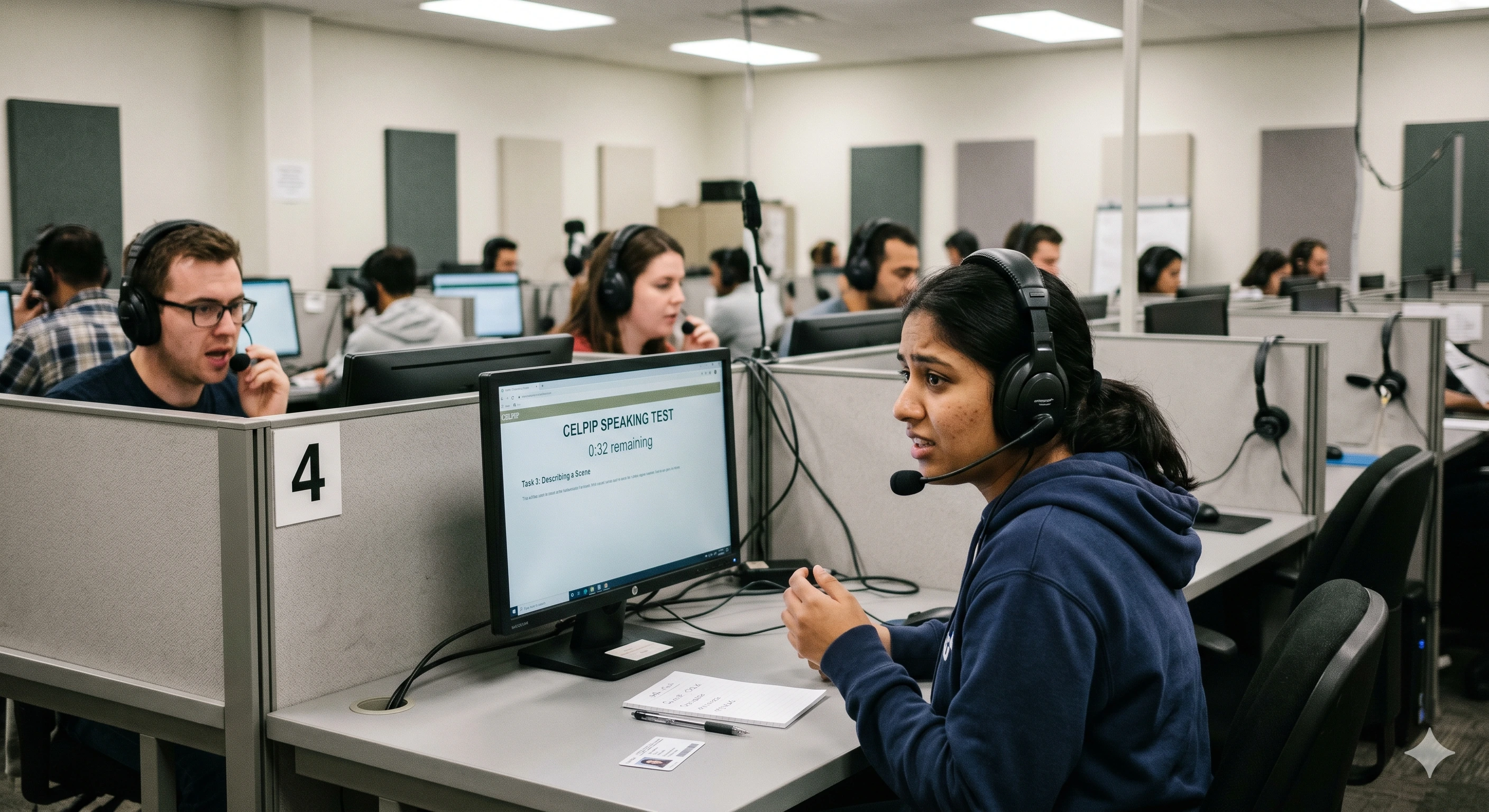
Mentor note: Let's be honest: the CELPIP Speaking component is objectively strange.
You're in a room with a headset, staring at a static image or a timer, trying to explain a situation or describe a scene—while other people next to you do the same thing out loud. That "why am I talking to a monitor?" feeling can trigger brain fog: you stumble not because you don't know English, but because your attention fights the setup.
If you want higher band-style performance, you have to move past the awkwardness and keep your delivery listenable for the raters. This is independent CELPIP-oriented prep (not affiliated with Paragon or trademark owners—see site disclaimer).
Quick summary
- Own the weird — expect it so it distracts you less when the timer starts.
- Talk to a person in your head — not to the glass; prosody follows intent.
- Train with noise — cafés or background TV beat dead-silence practice for test-day transfer.
- Bridge silences — short thinking phrases beat long frozen gaps (use them lightly).
- Smile a little — tiny facial lift can warm tone without sounding fake.
Explore Speaking practice and the rest of the blog when you're done here.
1. Own the awkwardness
The first step is accepting that it is weird. Don't fight the feeling—expect it. When you sit down, you can mentally label it: "Okay, I'm about to talk into a headset for a while in a busy room. Let's go." Expecting the discomfort often shrinks how much it hijacks your focus when the clock runs.
2. Visualize a human (even if they aren't there)
A common mistake is speaking at the screen. That often flattens tone and hurts listenability—the quality of how easy you are to follow.
Try this instead:
- Task 1 (Giving advice): Picture a friend just behind the monitor who asked for sincere help.
- Task 6 (Difficult situation): Picture a real stakeholder—neighbor, coworker—and speak with respectful clarity.
When you imagine a listener, emphasis and pacing tend to sound more human, not robotic.
3. Build your "noise bubble"
The centre is loud; you'll hear others. Ignoring chatter is tough—so practice with benign noise:
- Study at a café sometimes, or keep low TV / café ambience in the background during home rehearsal.
- If you can narrate calmly while unrelated speech exists, exam-day overlap feels less startling.
Safety first—don't practise distracted audio where you must stay alert for hazards (e.g. driving).
4. Don't fear the "ums" (use filler bridges sparingly)
Textbooks ban filler—but real humans use bridges. Better a short bridge than long dead silence:
"Let me think about that for a second…"
"Actually, another thing to consider is…"
"How should I put this—right, so…"
Use them lightly—raters notice heavy filler patterns too. Aim for recovery, not rattling noise.
5. The small "smile" hack
Try a hint of a smile, especially early tasks—it can change mouth posture and brighten tone slightly. Authenticity beats performance; skip it if it feels wrong for the prompt.
Why this feeds higher-band-style delivery
Higher bands lean on coherent structure, lexical range where it fits, pragmatic tone, and understandable delivery—the "listenability" idea in plain language. Confidence under odd conditions stops panic from shrinking the mental bandwidth you need for specificity and cohesion.
Practice on FreeCELPIPTest with "recover from stumble" as a metric—not perfection on take one.
FAQ — quick answers candidates search for
Why do I sound fine at home but freeze in the centre?
Novel noise + spotlight feeling increases cognitive load. Graduated noisy practice helps transfer.
Do fillers always hurt my score?
Density matters. Bridges that buy you half a beat to reorganize intent can help versus long silence—but chronic filler chains still blur clarity.
Is "talk to the screen" different from Zoom calls?
Somewhat—here you synchronize with scripted tasks in a supervised space with bleed-through voices. Simulate overlap, not only solo recording.
Bottom line
The CELPIP Speaking module tests communication under unnatural conditions.
You aren't fighting English—you're freeing English from setup shock. Normalize the weird, aim tone at imaginary humans, practise with noise, keep short bridges in your toolkit, optionally soften your face—and your message gets room to land.
Official format and policy belong to Paragon materials—confirm details there when they change.
Next reads: Speaking practice hub · Blog index